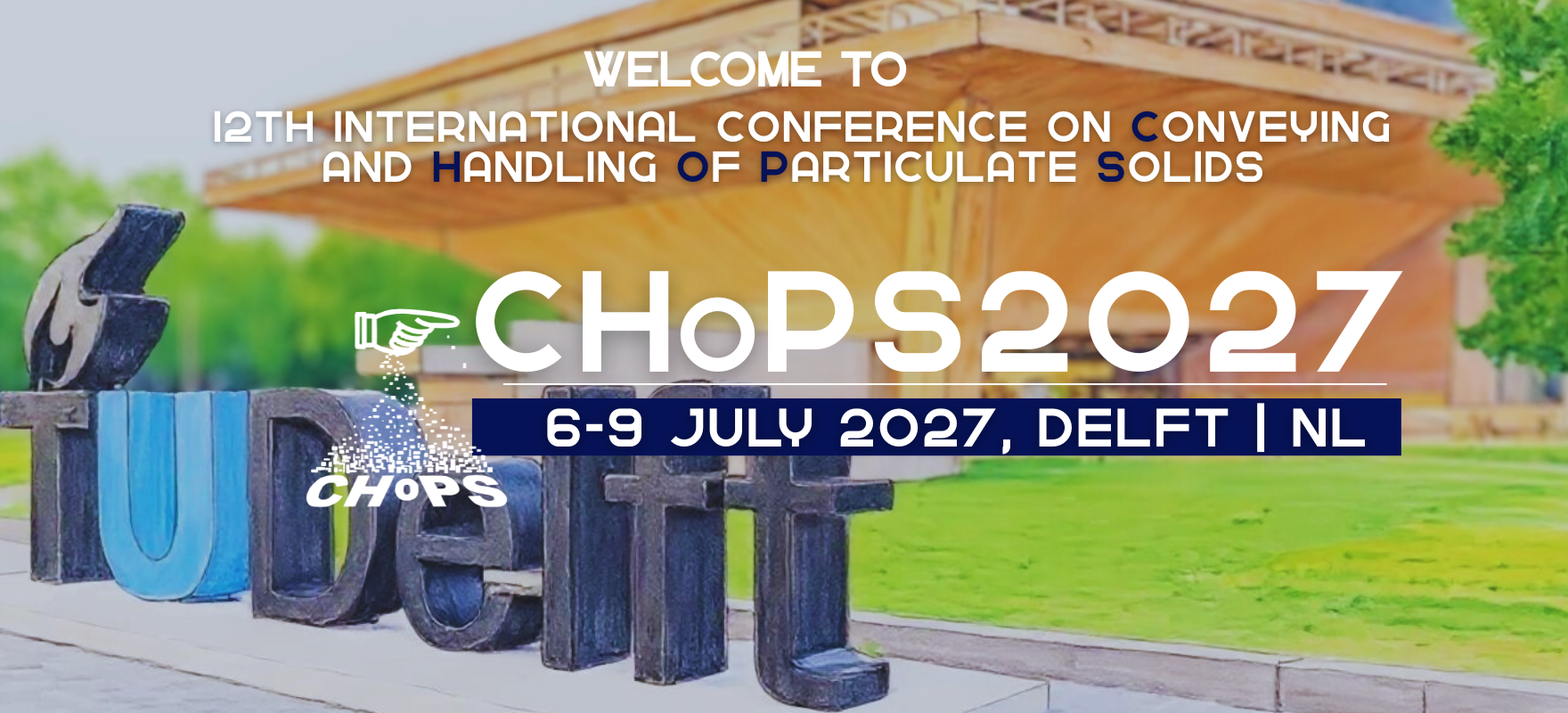
6–9 July 2027 | TU Delft, the Netherlands
CHoPS 2027 brings together over 300 international participants from industry and academia to advance the science and engineering of granular flow, spanning particle technology, powder processing, and transport of granular materials. Hosted at the renowned TU Delft, the conference offers a focused platform for research, innovation and cross-sector collaboration.
Theme: The Future of Granular Flow
The theme of CHoPS 2027 is “The Future of Granular Flow”, exploring the pivotal role of granular materials and powders in modern processes. We take a comprehensive view across multiple scales: from the system level, such as terminals and factories, to the process and equipment level, and down to the particle level, where the fundamental behaviour of granular materials drives innovation and efficiency. The programme includes experimental research, characterisation of granular materials and powders, and advanced modelling approaches that provide deeper insights and predictive capabilities.
With strong industry participation alongside academic contributions, CHoPS 2027 offers a distinctive platform for collaboration and knowledge exchange to drive innovation in granular flow.
Hosted at TU Delft’s Aula Conference Centre, CHoPS 2027 is designed to deliver a high-impact, professionally organised event in a vibrant and accessible setting. Delegates will enjoy a rich scientific programme, engaging keynote sessions and valuable networking opportunities that connect disciplines and sectors.
Abstract submissions will open in mid 2026. We welcome contributions from researchers, engineers, industrial experts and partners committed to shaping the future of granular materials.
We are looking forward to welcome you all in Delft in 2027!!
Prof. Dingena Schott
Conference Chair for CHoPS 2027
on behalf of the CHoPS International Scientific Committee and the Local Organising Committee
 | Stay connected with CHoPS 2027 Follow us on LinkedIn |